AI = power to the operators
The incentives around AI tools point to the people doing the work, not the ones managing it.
@RohdeAli|August 6, 2026
A VC friend at dinner last week told me why he's never going to use Claude Code.
I had just walked him through how I use it for evaluating deals, running founder outreach, and helping portfolio companies hire.
When I asked if he was trying any of it himself, he said no.
AI is great, but he had associates for that. Why give the work to AI, where he'd likely have to go back and forth and figure out how to improve the process, versus just giving it to a highly educated associate whose career depended on doing a good job end-to-end?
Rare candor from a VC. And it helped me realize: AI means power to the operator.
The incentives around these tools point to the people doing the work, not the ones managing it.
The dominant narrative says the opposite. Dario Amodei says that AI could eliminate half of entry-level white-collar jobs in 5 years.
My read on the dynamic is different.
If you're the one building the model every Tuesday, writing the brief, pulling the data, and sitting with the deck at 11pm, you have an incentive to put in the time to figure out how to automate that work.
The incentive to figure out a 40% faster method compounds with every cycle. The first 5 hours hurt. The next 3 keep paying back, every Tuesday after.
I'm seeing the market reprice in real time through my newsletter Ali Rohde Jobs.
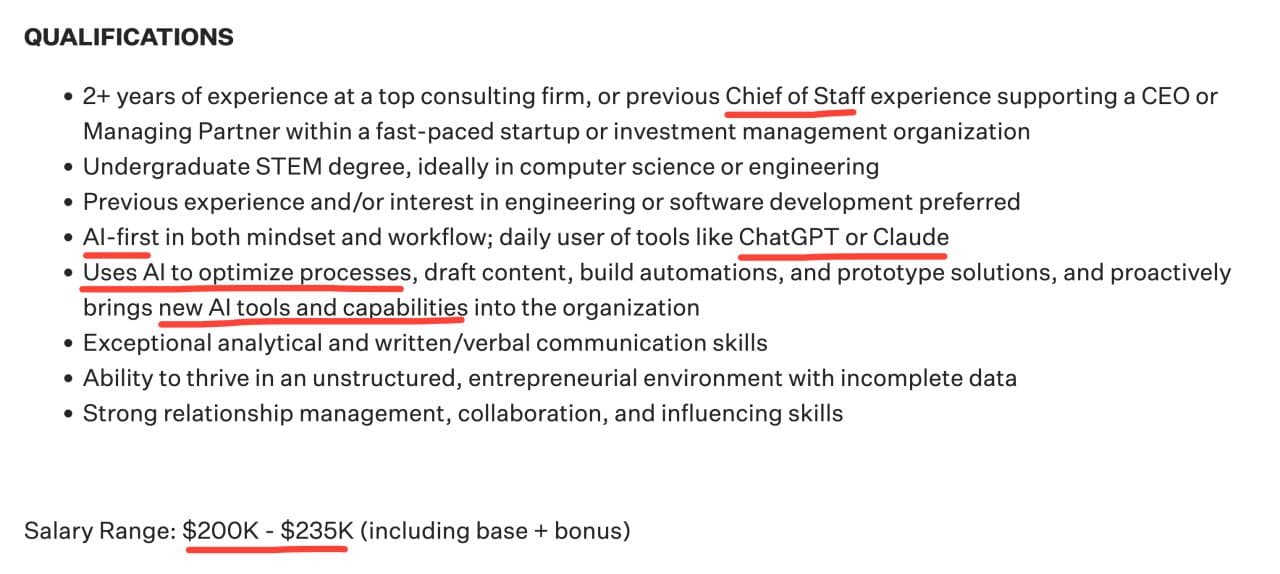
BizOps, RevOps, and Chief of Staff roles paid $110K two years ago for an "organized self-starter." Now many pay $200K+ for AI-native operators.
It is not an easy job market out there. But many operators are skilling up on agentic workflows, and they're in high demand. Managers aren't, because they're not on the ground.
Power to the operators.